
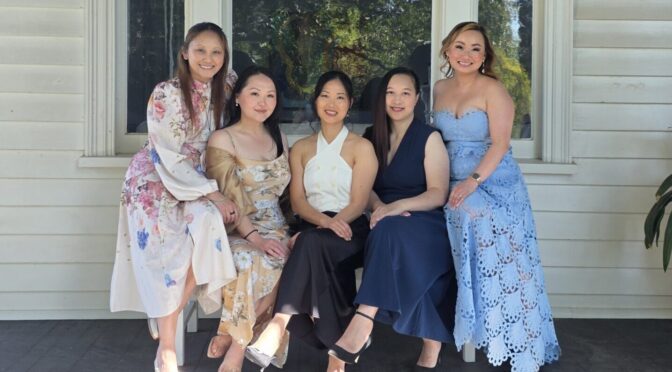
It was great to get away for the full weekend.
The beautiful wedding
With attempted family photos
Followed by evening fun
It was great to get away for the full weekend.
The beautiful wedding
With attempted family photos
Followed by evening fun
When you’re enjoying sharing the little moments, with the ones you love. They won’t be little forever, they barely want to spend time with us now!
Today started with a normal corporate ritual. A strategic planning session presenting to the executive team. After the session one of the senior executive leaders pulled me aside, we had a short, but insightful conversation. That conversation then steered into deep thought for me. A thought, I’m now sharing with you.
After I had presented the biggest problems we needed to solve and how we would get there, he told me the presentation was clear, structured, and had directly shaped strategic thinking. The work had landed. The outcome I actually care about, had happened. The organisation now UNDERSTOOD and aligned on the problem to be solved.
From that point onwards, we did what people in that moment always do: we decompressed into shop talk.
We moved into a strangely specific debate that anyone who has worked in product, consulting, or strategy will recognise immediately:
PowerPoint vs Miro.
He joked that my deck felt familiar — the consulting kind of familiar. We both had that background. The place where you learn to think in slides, where structure is a discipline and not decoration, where a presentation is not information but an argument. PowerPoint, in that world, isn’t a tool. It’s a thinking method and a convincing narrative.
Then, I admitted something: I don’t like building ideas and then presenting in Miro.
He laughed and said Miro isn’t really a presenting tool. It’s a collaboration tool.
That distinction mattered more than it sounds.
Because at that point I shared that I don’t actually use group sessions the way most people use them.
I don’t ideate in real time with a group.
Not because I dislike collaboration.
Because I use those sessions to diagnose the problem, not solve it.
While people are brainstorming solutions, I’m watching:
I’m not generating ideas yet.
I’m trying to understand what the room believes reality is.
He paused and said:
“So you’re a deep thinker.”
Then he asked a question that I wasnt expecting and dramatically shifted the conversation.
“How has that impacted your career?”
And then he told me his own story.
Earlier in his career he had presented analysis without giving a recommendation. He believed the role of the analyst was to show the truth and let leadership decide. But what leadership saw was something else: a lack of executive presence. A lack of leadership signal. In their minds, a leader doesn’t just explain reality — a leader tells people what to do about it.
It affected how he was perceived.
He learned: organisations don’t only evaluate correctness.
They evaluate direction-setting.
I realised I had never really thought about that question.
I told him, honestly, I would have had to care about promotion to notice whether it affected my career.
Even if it did, I didn’t track it.
I care about whether the work changed the decision.
Not whether the decision changed my title.
I said the same thing to him, as I say to all my leaders:
I care more about getting the job done than talking for the purpose of alignment in the hope of getting the job done.
That doesn’t mean alignment doesn’t matter to me. Its just not the role I want to play in the organisation. That role (in my view) is delegated to my manager and that set up, suits me just fine. Yes, I could do the influence part, but frankly being patient with people who are in risk delegation mode over impact improvement mode drains the hell out of me.
Having said that. I’ve also been fortunate. I’ve had leaders who actively amplified my voice — often when I didn’t want them to. They would pull me into rooms I wasn’t trying to enter. They interpreted my thinking as leadership even when I wasn’t attempting to demonstrate leadership.
But I also realised something else.
That was often the moment I started considering leaving.
Not because I disliked responsibility.
Because I wasn’t interested in playing what I privately think of as leadership theatre.
Large organisations run on coordination.
Not intelligence.
Not even strategy.
Coordination.
The hardest problem inside a big company is not figuring out the right answer. It’s getting hundreds of people to move in the same direction at the same time. So leadership signals evolve around behaviours that make coordination possible: confidence, framing, early direction, visible ownership.
The system is logical.
But it creates a quiet tension.
Some people think out loud.
Some people think first, then speak.
The first group helps groups move faster.
The second group sometimes helps groups move correctly.
Organisations tend to reward the first more consistently, because speed is visible and correctness is only visible later.
Neither group is wrong.
They are optimising different risks.
A startup fears being wrong about reality.
A corporation fears organisational misalignment.
That single difference explains a lot of what we classify as having “executive presence.”
Personally, I’m looking for a leader that can balance both. I believe a great leader can make them coexist.
The executive wasn’t telling me I needed to change.
He was revealing a truth: leadership perception forms before the final answer exists.
My instinct has always been: understand → structure → recommend.
The leadership signal often happens earlier: orient → reassure → decide.
That doesn’t mean one is better.
It means they serve different organisational needs.
I still don’t enjoy real-time ideation sessions. I still prefer forming a view after observing the system, not during the noise of it. And I still don’t measure my work by whether I looked like a leader while doing it.
I measure it by whether the decision improved.
But I now better understand what others are seeing in those moments.
They’re not watching who is smartest in the room.
They’re watching who helps the room know where to go when nobody is certain yet.
Not everyone wants the same relationship with leadership.
Some people want to lead organisations.
Some people want to solve problems inside them.
Both are valuable.
But they are not the same skillset, and confusing them creates quiet career anxiety for a lot of capable people who assume they’re doing something wrong when they’re actually optimising for a different goal.
For me, the conversation didn’t change how I want to work.
It changed how I interpret what I’m observing around me.
Sometimes leadership is decision authority.
Sometimes it is influence.
Sometimes it is simply the person willing to speak first.
And sometimes it’s the person in the room who is still trying to understand the problem while everyone else is racing toward the solution.
I’m still that person.
I just understand now why organisations react the way they do to it — and why the same behaviour that builds trust in one context can look like hesitation in another.
That’s the chaos part.
The constant part is this:
I’d still rather improve the decision than improve the perception that I improved the decision.
Enjoying the windy walk down St Kilda Beach, checking out the local makers market!
On paper, entering journalism right now looks irrational.
An industry under pressure. Fragmented audiences. Collapsing trust. Platforms siphoning value. AI rewriting the rules in real time.
Naturally, I walked straight into it.
I’ve always been drawn to systems under strain. Over the past 15 years working in Australia, I’ve moved from one extreme to another — from a hyper-mature, self-cannibalising telco market to an industry still working out what it wants to become. Editorial and news media sits firmly in that in-between decade: less stable, more volatile, and far more revealing of what people actually value.
We live in a world saturated with crisis. Geopolitical conflict. Climate volatility. Social fracture. Logic says this should be journalism’s golden age. A moment where evidence, clarity, and accountability matter more than ever.
The data tells a different story.
The Reuters Institute Digital News Report 2025 shows an industry misaligned with its audience: trust hovering around 40%, engagement slipping, and attention splintering across platforms. The system designed to inform us is faltering at the precise moment it’s most needed.
And yes — I’ve joined right in the middle of it.
This isn’t just institutional distrust. It’s cognitive exhaustion.
Globally, 58% of people worry about whether they can tell real news from false information. In some countries, that number climbs above 70%. When more than half the world fears being misled, scepticism becomes the default — even toward legitimate reporting.
Trust hasn’t disappeared. It’s become conditional. And boy, do I have lots to say about Trust (as a Marketer… that’s for another day)
Forty per cent of people now actively avoid news, up from 29% in 2017.
Not because it’s boring.
Because it’s overwhelming.
The attention economy rewards constant urgency, outrage, and update cycles. Exactly the content that drives people away. Publishers are incentivised to exhaust their audiences, then puzzled when those audiences disengage.
It’s a brutal loop.
A decade ago, news consumption clustered around a handful of platforms. Today it’s fractured across Facebook, YouTube, Instagram, WhatsApp, TikTok, and X — all competing weekly as news sources, all demanding different formats, tones, and compromises.
At the same time, video has overtaken text as the dominant news format. Audiences increasingly want stories told by someone, not by something.
That shift has elevated creators and personalities (commentators, aggregators, explainers) many of whom build trust without bearing the cost of original reporting. People don’t just follow information anymore. They follow filters they trust.
Faceless brands lost something here. Humans filled the gap.
Under-25s are already using AI chatbots as a regular news source, drawn by speed, simplicity, and relief from ad-heavy sites.
But here’s the tension: audiences expect AI to make news cheaper and faster, while simultaneously believing it will make news less trustworthy and less transparent.
They still want humans in the loop.
Publishers, however, face an existential threat. As AI platforms summarise content directly in search and chat interfaces, referral traffic erodes. Publishers absorb the cost of reporting; platforms capture the attention, loyalty, and revenue.
The risk isn’t irrelevance.
It’s being summarised out of existence.
Nowhere is this more visible than local news.
Newsroom employment has nearly halved over a decade. Remaining journalists carry heavier workloads, produce more content, and spend more time on digital output, often while print advertising still underwrites the business.
Platforms have replaced newsrooms as local noticeboards. Community information (classifieds, events, buy-and-sell) has moved elsewhere…. Facebook. What remains for publishers is expensive, original reporting.
Yet many people assume local news is “doing fine,” because headlines still appear. They don’t see the skeleton crews behind them. And so the urgency to subscribe never quite materialises.
Even well-intentioned funding brings trade-offs. Grants shape coverage priorities. It’s not corruption — it’s gravity. And it subtly reshapes what gets investigated, and what doesn’t.
The data is blunt: audiences want journalism that investigates power, explains complexity, and helps them understand the world. Not just react to it.
They want context.
Utility.
Perspective.
Connection.
And, quietly, hope.
One clear outlier exists: long-form audio.
Podcasts attract younger, higher-income, highly engaged audiences. Most listeners say they understand issues more deeply through audio than any other medium. And importantly, they’re willing to pay for it. Not as news, but as education.
Depth, it turns out, still commands attention 🙂
If audiences trust individuals more than institutions…
If they’ll pay for depth and transparency…
If personality and credibility now travel together…
Does journalism’s future sit inside struggling organisations or with individual reporters building direct, paying relationships with audiences?
The answer matters. Because it determines whether journalism stabilises or transforms into something fundamentally different.
Which brings me to the industry I’ve stepped into.
Sixty per cent of car buyers now rely primarily on digital research, arriving at dealerships informed and decisive. Platforms stripped dealers of their information advantage long ago, just as they stripped newsrooms of micro-moments like classifieds, timetables, and listings.
What remains valuable is expensive, original insight: testing, explaining, contextualising, and holding manufacturers to account.
So if you’re an automotive publisher, the question is simple:
Are you competing on speed and volume — or on trust, depth, and authority?
Because only one of those games is still winnable… well. Those are the cards I’ll play walking into new horizons.
It’s a new year, and I’m walking into it with a different kind of energy.
Last year, I closed a major chapter — one of those milestones you know will leave fingerprints on you for decades. For me, that chapter spanned three intense, formative years. It was a period defined by transformation: professionally, personally, mentally, emotionally, and in ways I couldn’t have predicted when it began.
The last three years didn’t just shape what I delivered at work. They reshaped how I work, why I work, and who I want to be while doing it.
Looking back, I’m not just proud of what I experienced and delivered, I’m deeply grateful for what it built in me along the way:
And the confidence that grows quietly after proving to yourself you can handle more than you once thought possible
And this year?
I get to apply those learned skills to the arenas I’m most passionate about — the places where passion and profession finally overlap.
I strongly believe that life isn’t meant to be compartmentalised into what you’re good at versus what you love. The best version of ourselves exists where those two worlds collide, even if it feels messy at first.
And speaking of collision. That’s exactly what happened when advice from a thought leader landed in my inbox at just the right moment.
The piece used the phrase:
“Fake it till you make it”
It was used as a symbol for how confidence isn’t built. And while I agree entirely with the wreckage that slogan has evolved to mean — confidence by performance, not proof — it triggered a thought in me that went beyond the words on the screen.
It made me reflect on the why.
Not whether the advice was wrong, but why advice like this often fails once it leaves the sender’s hands.
Because so many people heard:
“Fake confidence. Hide the fear. Be someone else.”
When the real intent was likely closer to:
“Start before you feel ready, borrow courage while you build capability.”
For me. It wasn’t the advice that failed.
It was the interpretation layer.
And we all know this, even if we don’t say it out loud enough:
Communication is only effective if the receiving audience interprets it correctly — not if you think you delivered it clearly.
I’ve built campaigns, launched products, delivered stakeholder narratives, and led rooms full of dominant communicators. In every one of those environments, success wasn’t defined by the message that was sent. It was defined by the meaning that was understood.
And confidence?
It works the same way.
It’s not built by memorising motivational slogans or performing like you already own the result. It’s built by:
And trusting yourself through uncertainty, without needing to look fearless while doing it
So maybe the real lesson isn’t about faking or making at all.
Maybe it’s this:
Say it clearly. Interpret it generously. Act on it bravely.
As I step into 2026, these are the guiding principles I’m taking with me. Not because they’re universal truth, but because they’re the ones that resonate in my bones right now.
And if there’s one thing chaos has taught me, it’s that we’re all still learning. We’re all still interpreting. We’re all still figuring out which principles we’ll subscribe to next.
So here’s mine today.
How about you?
Fashion has always been more than clothing for me. It is memory, inheritance, and question all at once.
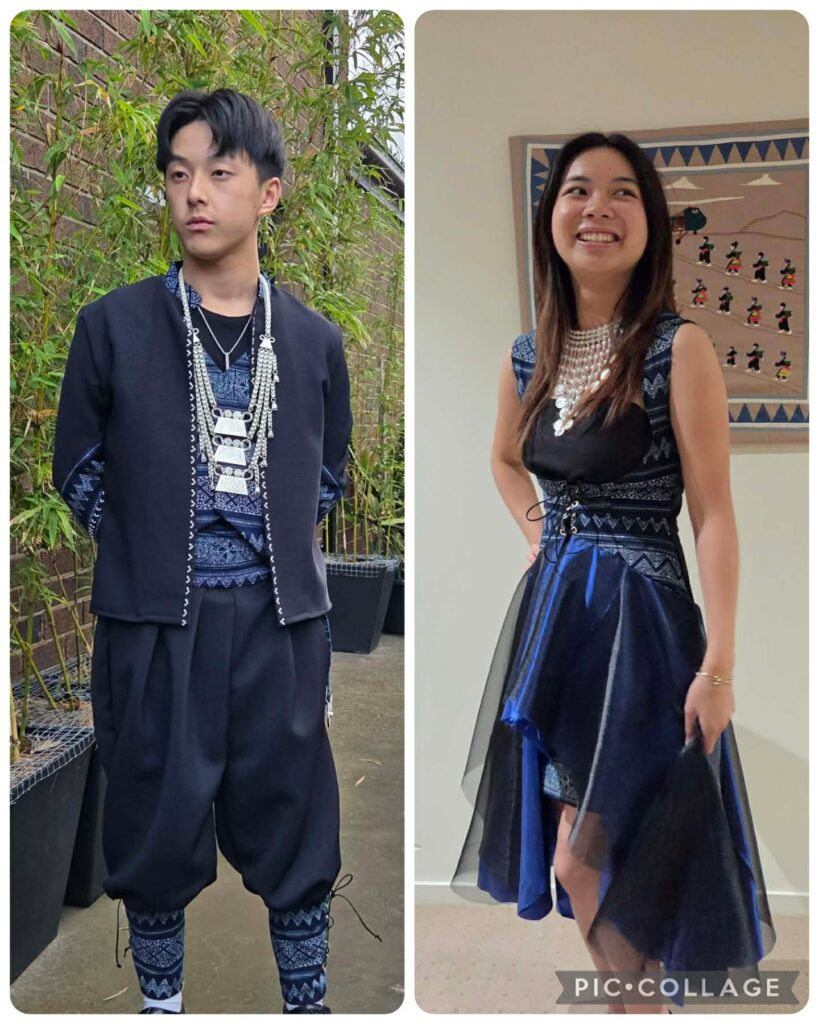
This year marks the first year I decided to design my first official collection and showcase at the 2025 Hmong New Year, and I am calling it “VANG: Between Threads“
I wanted to create a space where tradition meets choice, where culture is not fixed in the past but actively lived, negotiated, and reimagined.
As a Hmong Australian, I work with an awareness that our cultural expressions are often misunderstood, simplified, or expected to remain static. Yet Hmong identity, like all living cultures, has always adapted across borders, generations, and circumstances. The garments I entered in the Fashion competition explore that tension:
What we inherit, verses
What we carry, verses
What we choose to transform.
Indigo is central to this collection because it has long been foundational to Hmong textile practice. Hand-dyed indigo cloth—woven, dyed, and patterned through slow, labour-intensive processes—formed the basis of everyday and ceremonial dress. It speaks to endurance, connection to land, and the quiet strength of women’s work passed through generations.
May’s design honours this lineage through a structured bodice and flowing high-low skirt. Traditional geometry meets contemporary femininity, allowing movement and lightness while remaining anchored in craft. This piece is an homage, but not a replication—it reflects how tradition can remain present while evolving in form.
James’ look reinterprets Hmong menswear through modern proportion. Balloon-style trousers reference garments historically designed for movement—farming, travel, ceremony—now refined with cuffed legs and minimalist layering. The focus remains on the indigo textile itself, positioning heritage not as spectacle, but as lived continuity.
Together, these pieces speak to grounding—what holds us steady.
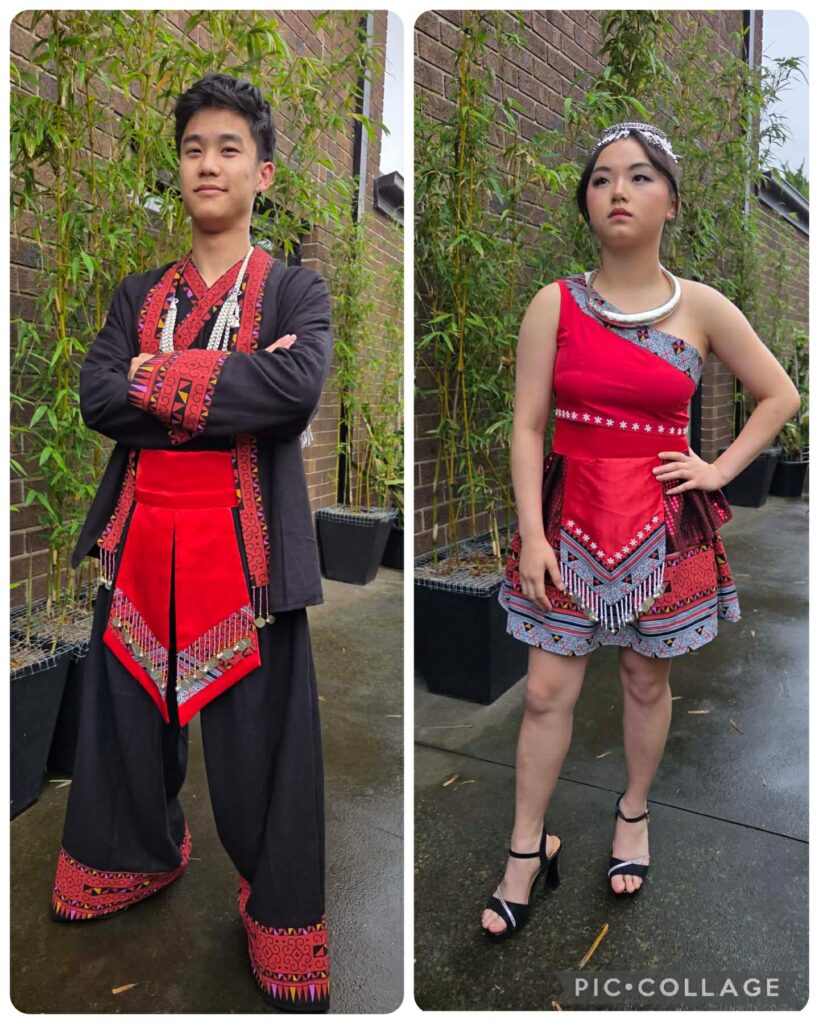
Red is not a dominant colour in everyday Hmong dress, and it is essential to say that clearly. Unlike in other Asian cultures, where red is widely celebratory or decorative, Hmong use of red is spiritual, rare, and deliberate.
My inspiration comes from a specific spiritual context: the red mask worn by Hmong shamans during ritual practice. In this space, red signals protection, transformation, and the ability to move between worlds. It is not about celebration—it is about spiritual authority and liminality.
Kevin’s design explores red in this charged way. Japanese-inspired overcoat forms and wide-leg proportions create restraint, balance, and stillness. Within that calm structure, bold Hmong motifs are intentionally framed along the edges and in the panels where meaning is concentrated. Red becomes an interruption, an invocation, a presence.
This garment exists between realms: spiritual and material, inherited and reimagined.
If the earlier looks are about grounding and threshold, Helena’s design is about voice.
This piece reflects a generational shift—where heritage is no longer something worn only in prescribed ways, but something actively reshaped by youth. The cropped top and mini pleated skirt are unapologetically modern. They signal autonomy, visibility, and confidence.
This is not a tradition being abandoned. It is a tradition that is claimed differently.
Helena’s look asks an important question: What does it mean to honour culture when its old forms no longer bind you?
The answer here is not rejection, but ownership.
Across all four designs, the idea of between remains constant:
This collection does not attempt to preserve culture through replication. Instead, it explores continuity through adaptation. The garments are not costumes or recreations—they are contemporary expressions shaped by lived identity.
I walked away from my $200K+ salary, annual bonus, and retention package — not because I could earn it elsewhere, but because it wasn’t the life I wanted anymore.
People say it’s honourable but not logical.
But here’s the truth:
I didn’t make a financial decision. I made a values-led decision.
Because while money can buy a comfortable life,
I can’t buy time back with my kids.
And it definitely can’t buy the feeling of building a life that is mine, if earning it means being trapped in a world that challenges my values.
So I chose me.
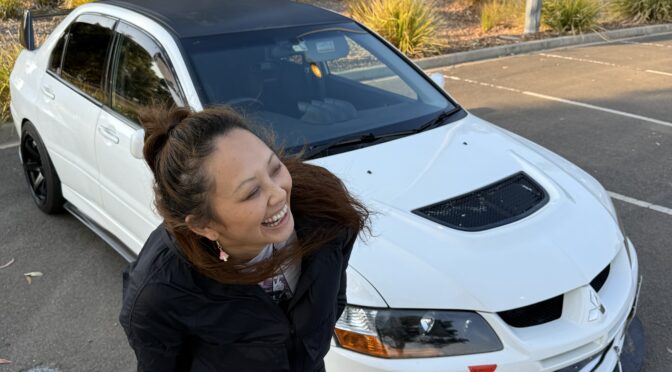
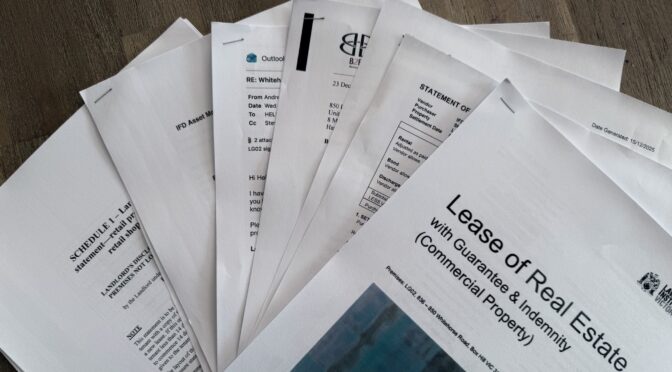
And today, as I settle the papers on my new commercial property, I’m reminded exactly why I walked away:
✨ To build foundations, not just careers
✨ To create businesses I’m excited to wake up for
✨ To spend more time doing what lights me up — not drains me
✨ To work with incredible clients who energise me, not exhaust me
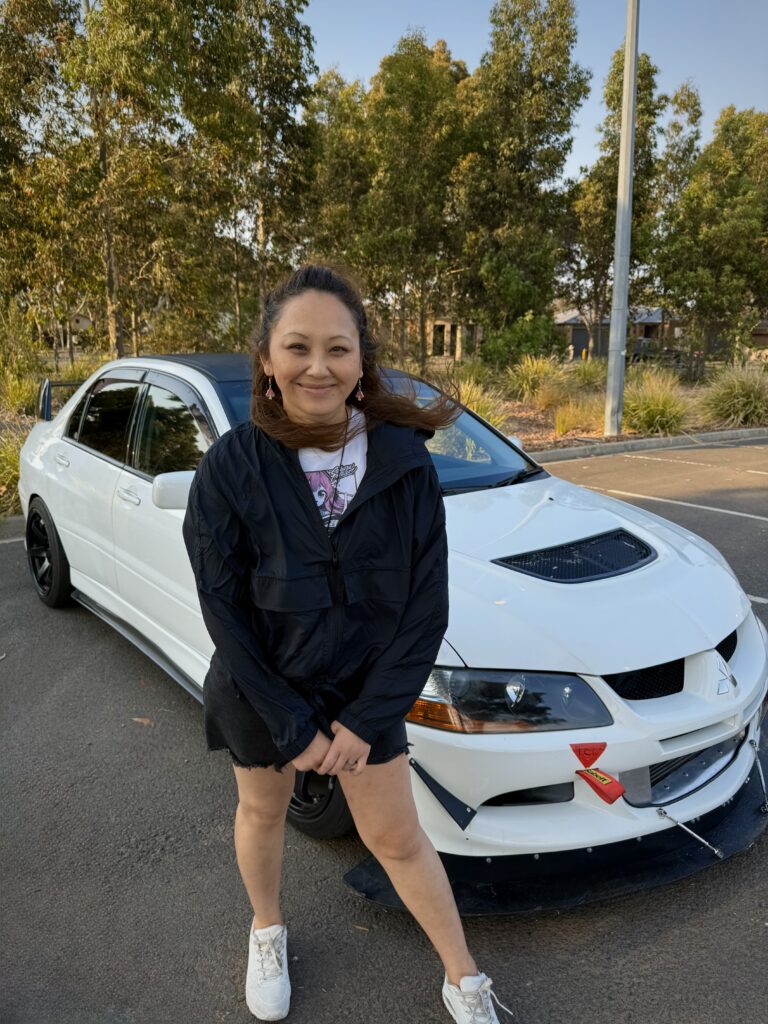
✨ To be closer to my passions — cars, creativity, and collecting Pokémon cards with my kids
✨ To design a life where my work reflects my values, not my fears
Walking away from six figures wasn’t the loss.
Staying would’ve been.
Because I don’t want a life that’s “supposed to make sense” to other people.
I want a life that feels true to me.
And I’m finally living it. One decision, one building, one adventure at a time.
Here’s to foundations
that I’m building brick by brick.
Not for logic,
but for legacy.
I’m pacing down the footpath, a dog lead in one hand and tissues in the other — because yes, spring hayfever does not care about life choices. My eyes are watering… partly allergies, partly gratitude.
For the first time in what feels like forever, I’m walking the dog.
Not rushing out the door for a 7am meeting.
Not glued to a screen answering urgent emails.
Not living life in the small cracks between stress and exhaustion.
Just walking. Just breathing. Just… being here.
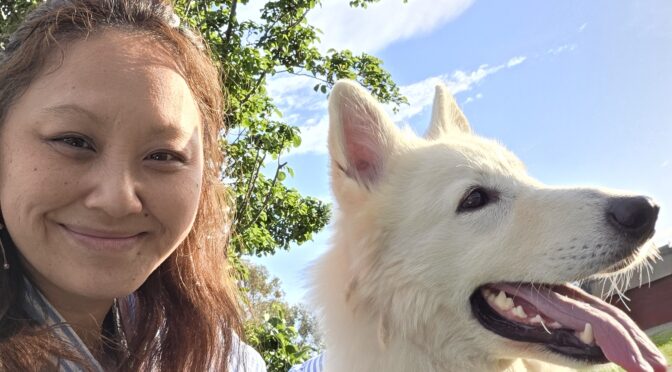
Minnie trots ahead, proudly showing off her summer coat, shiny, soft, and completely unaware she’s become the mascot of my comeback to living. Three years have slipped by since I’ve done something as simple and sacred as this daily ritual of movement.
And as I watch the kids run ahead, laughing over who gets to hold the ball next, something hits me:
I feel like I am part of my own life again.
I’m seeing moments I used to scroll past.
I’m hearing the conversations I used to tune out.
I’m rediscovering the man walking beside me, my husband, not as a co-parent in survival mode, but as my person.
This isn’t about slowing down. It’s about finally moving forward.
Leaving that high-stress job wasn’t a loss, it was a homecoming. A return to the parts of me that were buried under deadlines, performance reviews, and the constant pressure to be “on.”
Now, the most important thing I show up for is right here on this evening walk:
✨ My family.
✨ My health.
✨ The little joyful things.
✨ The dog with the gorgeous summer coat who reminds me to enjoy the sun too.
Spring may set off my allergies, but it’s also giving me a season of renewal.
And as the breeze carries a mix of pollen and possibility, I can finally say:
I’m back.
I’m here.
I’m living my own life again, one dog walk at a time.
There’s something magical about watching your child find a world they truly adore — and for my son, that world is MSM. Yes, I’ve learned recently it stands for My Singing Monsters, and honestly? It’s adorable.
I’ve watched him go from casually opening the game… to becoming a fully committed little monster maestro.
The kind of commitment that looks like:
✨ Staying up late waiting for game updates
✨ Saving every dollar of pocket money to buy gems
✨ Carefully planning his island layouts like a mini architect
✨ Mastering breeding combos like he’s running a genetics lab
And in the middle of all that? Pure, unfiltered joy.
As a mum, it’s easy to underestimate games. We worry about screen time, we worry about distractions, we worry about tired eyes and forgotten lunch boxes… but then you see this side of gaming:
The creativity.
The patience.
The excitement of unlocking a new monster.
The way he beams when he teaches me the characters’ names — as if I’m the student in his tiny classroom.
The pride in saving his own money and choosing how to spend it.
It’s not just a game to him. It’s his little universe.
And I love that he gets to be just a kid in it.
A kid who is passionate.
A kid who is imaginative.
A kid who celebrates small wins.
A kid who stays up (a bit too late sometimes) waiting for something he’s excited about.
Isn’t that exactly what childhood should be?
In a world that grows up too fast, these are the moments I treasure:
Watching him record his MSM videos… hearing him giggle when his monsters start singing… seeing him proudly show me his island like it’s a work of art.
It reminds me that joy doesn’t have to be complicated.
Sometimes it’s just a boy, a phone, a singing monster, and a mum smiling from the doorway.